
The Complete Guide to Newest US Sweepstakes Casinos in 2026
 Available in US
Tracking every new US sweeps launch since 2024.
Start Reading
The first time I tried to count every new US sweepstakes casino that launched in a single month, I gave up on day four. The spreadsheet kept growing faster than I could verify entries, and half of them were still in soft launch — live in Kansas but not Kentucky, accepting crypto deposits but somehow not crypto withdrawals yet. That month was early 2025. The pace has not slowed.
Eleven years of watching this industry has taught me that 2026 is not just another busy year. It is the year the dual-currency model finally matured into a recognizable category — and simultaneously the year it started colliding head-on with state attorneys general, tribal gaming lobbyists, and legislation that rewrites entire state maps in a single signing ceremony. More than twenty-five new sweepstakes casinos launched in 2025 alone, and the total count of active US platforms now sits somewhere north of 140.
This guide gives you a complete, data-backed picture of the landscape as it actually exists in April 2026 — not as it was written up in launch press releases eighteen months ago. I track every new US sweeps launch from the inside: soft-launch timelines, welcome-bonus structures that keep getting rewritten, redemption queues that stretch during fraud review, cease-and-desist letters landing in legal departments. My job is to tell you which patterns are real, which numbers come from serious analysts versus operator self-reporting, and what questions to ask before you hit the register button at a brand you have never heard of.
California signed Assembly Bill 831 into law in October 2025, and on January 1, 2026 the dual-currency model went dark in what used to be the biggest single state in the market. That is the context for every new brand launching right now. They are launching into a map that was redrawn three months ago, and they are launching fast because the regulatory window keeps closing.
The 2026 Sweepstakes Landscape at a Glance
- More than twenty-five brand-new US sweepstakes casinos launched in 2025, pushing the active platform count past 140 and driving projected gross revenue toward the eleven billion dollar range for the category.
- Seven states have now confirmed bans — California, Connecticut, Montana, New Jersey, New York, Indiana effective July 1, and Maine — cutting off a substantial slice of the addressable US population.
- Thirty-five percent of sweepstakes players are aged 31 to 40, the gender split is an unusual 51/49, and ninety percent of players say they consider this activity gambling.
- First redemption at a new brand typically takes 24 to 72 hours for KYC review; crypto payouts clear in hours after that, ACH in two to three business days.
- The seven-point evaluation framework below gives you the questions to ask before trusting a site that launched this quarter.
What Makes a Sweepstakes Casino "New" in 2026
The definition of "new" is slipperier than it looks. A brand can have a freshly registered domain and still be the third rebrand from the same parent company. Another might advertise a 2026 launch date while actually going live in late 2024 and quietly adding territories for fifteen months. My working rule: if the dual-currency system, the game library, the terms of service, and the redemption catalog have all been publicly live for less than eighteen months in their current form, I treat it as new.
More than forty new sweepstakes operators debuted during 2024 and 2025 combined. That flood created a cohort of sites all going through their first full regulatory cycle, their first KYC scaling challenges, and their first payment-processor renegotiations at roughly the same time.
Soft launch versus full launch
The industry's 2026 default is the soft launch. A new brand flips on the site in two or three states, invites beta players through affiliate partners, caps Gold Coin purchase amounts, and watches fraud dashboards for a few weeks before opening registration. Full launch — open registration, full state coverage minus the bans, all payment rails working, full game library — used to happen on launch day. Now it takes six to twelve weeks. If you sign up in week two of a soft launch, your experience will barely resemble month five at the same brand. The soft-launch monitoring playbook covers how to read the signals.
Industry directories as of September 2025 identified between 150 and 190-plus active US sweepstakes casino brands — Bonus.com catalogs 160 plus, Casino.org lists over 180, Sweepsy verifies 256. The discrepancy between counts is itself the signal: nobody has a definitive total because new brands go live faster than researchers can verify them.
The bar to launch a sweepstakes site is lower than the bar for a licensed iGaming operator — no state gaming license application, no tribal compact, no multi-year regulatory review. A company with an offshore license, a white-label game aggregator deal, and a payment processor willing to take the risk can go live in roughly ninety days.
Dual-currency model — the legal structure where an operator issues two virtual currencies: Gold Coins for play-money mode (no cash value) and Sweeps Coins for promotional mode (redeemable for prizes). Regulators are now actively challenging this label in several states.
Brand mortality in this cohort is worth noting. Of the forty-plus operators launched in 2024 and 2025, a meaningful slice has already restructured, exited core markets, or gone dormant. "New" does not automatically mean "still new next month."
The Market Landscape and Why So Many Brands Launched in 2024 Through 2026
Sitting down with the KPMG primer last June was the moment I stopped calling this category "emerging" in conversations with other analysts. The numbers had crossed a threshold that forced a different vocabulary. US sweepstakes casino gross revenue hit 10.6 billion dollars in 2024, with roughly 3.4 billion in net gaming revenue after prize payouts. That is a standalone vertical big enough to reshape ad inventory, payment processor capacity, and state legislative calendars.
What makes the trajectory unusual is the pace. Eilers & Krejcik Gaming projects the sweepstakes segment will reach 11 billion in gross gaming revenue for 2025, up from 3.1 billion in 2022. KPMG's modeling puts 2025 revenue between 4.6 billion in a base case and 14.3 billion in a high scenario. The CAGR from 2020 through 2024 ran between 60 and 70 percent, and Macquarie's Aaron Lee pegs the CAGR at approximately 75 percent from 2019 through 2024. I have not seen that kind of category expansion outside early-stage crypto exchanges.
Worldwide sweepstakes gaming revenue is 98 percent generated within the United States. This is an almost entirely American category — a detail that quietly explains why state-level regulation is the pressure point operators actually feel.
Where the money actually comes from
US players spent an estimated 8.5 to 10.6 billion dollars on Gold Coin packages in 2024, and operators returned roughly 65 to 70 percent back as Sweeps Coins prize payouts. If you understand that the underlying revenue engine is Gold Coin purchases — not redemption losses — then you understand why every new brand spends so heavily on welcome bonuses and daily login rewards. They are buying the purchase conversion.
Lee's team at Macquarie summarized the math: Eilers forecasts the industry will grow to 5.6 billion dollars of gross revenues in 2024 at approximately 30 percent year-over-year, and 6.9 billion in 2025 at 24 percent year-over-year, which we estimate translates to roughly 1.7 billion and 2.1 billion on a net basis, respectively.
The net figure grows in line with the gross. The industry has not figured out a way to make more money without paying more out, and new brands have to match that ratio.
Why so many new brands launched in this window
Three forces converged. First, VGW Holdings — the Australian parent of Chumba Casino — started losing market share. VGW held over 90 percent of the US sweepstakes market primarily through Chumba at one point; by mid-2025, that figure had declined to approximately 50 percent. When a dominant player's share cuts in half, every new entrant sees open territory. The VGW Chumba blueprint unpacks the structural playbook.
Second, the regulatory clock started ticking. Operators launching in 2024 and early 2025 knew state-level restrictions were coming. Launching early and collecting eighteen months of Gold Coin revenue before a state's ban took effect became the explicit strategy.
Third, Lee's analysis suggested the category could actually help iGaming legalization rather than hurt it: Though there are clear similarities between sweepstakes and iGaming, we see little evidence of cannibalization. Rather, we think the growth of sweepstakes could actually be a positive for iGaming legislation by attracting attention to the untapped tax revenues.
That framing made it easier for investors to write checks to new operators even as the regulatory storm built.

How New Sweepstakes Casinos Actually Work
If you have never used a dual-currency site, the whole structure looks like someone bolted two different products together and called it one — and that is essentially what happened. The structure is a direct response to a specific legal definition of gambling with a specific workaround built into American sweepstakes law.
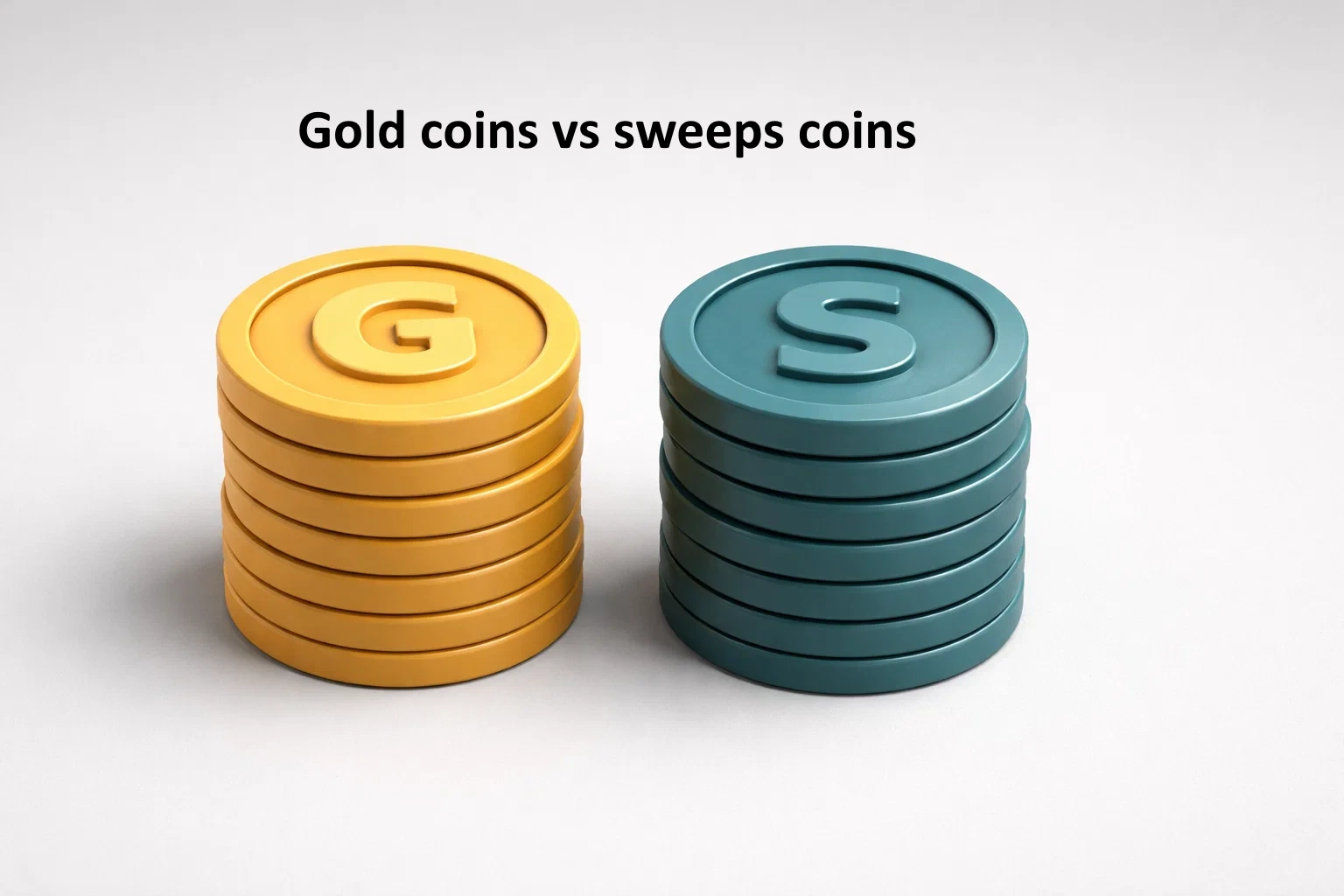
Gold Coins (GC) — the play-money currency. You can buy packages of Gold Coins. Gold Coins cannot be redeemed for anything. They are the legal reason the site is not gambling.
Sweeps Coins (SC) — the promotional currency. You cannot buy Sweeps Coins directly. You receive them as bonuses with Gold Coin purchases, through daily logins, through AMOE mail-in requests, and through in-game awards. You can redeem Sweeps Coins at a 1 SC = 1 USD ratio, subject to playthrough and minimum thresholds.
The mechanism every new brand copies: you buy a Gold Coin package because you want to keep playing Gold Coins for fun. As a promotional bonus, the brand includes free Sweeps Coins. You now have two balances and can play slots, table games, or mini-games with either balance.
Worked example: a hypothetical $9.99 Gold Coin package
Purchase price: 9.99 USD
Gold Coins delivered: typically 45,000 to 60,000 (brand-dependent)
Sweeps Coins bonus: typically 20 free SC attached to the purchase
Theoretical maximum SC redemption at 1 SC = 1 USD: 20 USD
Catch: 1x playthrough means you must wager 20 SC before redemption unlocks. At 3x playthrough (Stake.us), the same 20 SC requires 60 SC of wagering.
The three ways Sweeps Coins enter your account
Gold Coin purchase bonuses are the biggest single source. The no-deposit bonuses guide covers these in depth. The second source is daily login bonuses and streak rewards — usually 0.3 to 2 SC per day. The third source is AMOE, the one that keeps the entire legal structure standing.
AMOE (Alternative Method of Entry) — a free method to request Sweeps Coins, usually by mailing a handwritten 3-by-5 card to an operator's postal address. Every compliant sweepstakes site must offer AMOE because the "no purchase necessary" principle is what keeps the site on the sweepstakes side of the legal line.
Magnus Boberg of JustGamblers framed the logic: Traditional gambling requires three elements: consideration (payment), chance, and prize. Sweepstakes sites do not require payment, so they bypass regulations that apply to traditional online gambling.
AMOE is the "do not require payment" part. Whether that distinction continues to hold up in every state is a separate question.
The AGA's 2025 survey found 67 percent of sweepstakes players say they are interested in Sweeps Coins specifically, and 95 percent say including Sweeps Coins in Gold Coin packages is important — 42 percent call it "extremely important." Players understand that the SC layer is the part with actual economic value.
Before your first session at a new brand, verify:
- GC and SC balances are displayed separately in the account header, not merged.
- The playthrough requirement is spelled out in the T&Cs, not buried in a promotional email.
- The minimum SC redemption threshold (often 50 or 100 SC) is listed on the cashier page.
- AMOE instructions include a postal address, expected response time, and monthly request cap.
- The switch between GC and SC mode is easy to find at game launch.
Evaluating a Just-Launched Brand: The Sweepora Seven-Point Framework
I have an internal checklist I run every time a new brand appears in my tracker. These are the seven questions I answer before a new site gets past the first-look stage. The single biggest mistake I see readers make is deciding a new brand looks legitimate based on the welcome bonus headline and registering before asking any of the questions below.
The seven-point framework
- 1. Parent company identification. Who actually owns the operator? Not the brand name — the corporate entity. Blazesoft, SGSE LLC, or a fresh Anjouan-registered shell tell you very different things about operational depth.
- 2. License footer check. Is there a license identifier at the bottom of the page? Does it resolve to a real regulator? Curaçao, Anjouan, Malta each have different rigor, but any verifiable identifier beats the absence of one.
- 3. Game provider roster. Pragmatic Play, Hacksaw Gaming, Nolimit City, BGaming, Playson — these studios do provider-level due diligence before partnering. Their presence is an indirect reference check.
- 4. Terms of service specificity. Vague T&Cs are the single biggest red flag. Specific playthrough ratios, redemption thresholds, and state exclusions should all be numeric and verifiable.
- 5. Payment processor disclosure. Which processor handles GC purchases, and which handles SC redemptions? Mismatches often signal instability.
- 6. Community signal age. Look at the earliest user reviews. If the brand has been live for ninety days but the oldest review is seven days old, something is off.
- 7. First redemption behavior. The one you cannot answer until after you have tried. How long does it take, and does the site communicate during review or go silent?
Each point targets a different failure mode. Point one catches white-label operations where nobody is really running the shop. Point two catches brands running without any regulatory cover. Points three and five catch brands that rushed to launch without proper commercial agreements. Point four catches brands whose T&Cs were cut and pasted. Point six catches the ones buying early reviews. Point seven is the only one that tells you something about the organization under operational pressure.
The VGW market share erosion — from 90 percent to approximately 50 percent by mid-2025 — is the backdrop. When a category's dominant operator shrinks that quickly, competitive pressure on new brands to cut corners during launch goes up sharply. The framework is how you tell the organized new entrants from the rushed ones.
The seven-point framework is a legitimacy filter, not a quality ranking. Two brands can both pass all seven points and still offer dramatically different player experiences. The framework gets you to "is this a real operation?" It does not answer "is this the operation I want to use?"
Casino.org's editorial team put the issue with new-brand terms concisely: The downside of having so many sweeps casinos to pick from is that the terms and conditions are far from standardized across operators. Sweeps casinos constantly experiment with bonus offers, withdrawal restrictions, game options, customer service levels, and more.
That experimentation is why the T&C read in point four matters so much.
Welcome Bonuses at Newly Launched US Sweeps Casinos
Here is a thing most players do not realize about welcome bonuses at brand-new brands: the headline number on the signup page is designed for comparison, not for you. When a site advertises 500,000 Gold Coins plus 100 Sweeps Coins plus a thousand VIP points on registration, the operator is telling you where they want to sit in the comparison tables, not what the bonus is worth.
What it is actually worth depends on three things: what unlocks on plain registration versus phone verification versus full KYC, what the playthrough requirement converts that into, and whether the SC portion has an expiration window most players miss.
The standard anatomy
A typical new-brand welcome bonus in 2026 has three layers. The first unlocks at email registration — a modest Gold Coin stack and a small SC amount, often 2 to 5 SC. The second unlocks at phone verification. The third, which includes most of the advertised SC, unlocks only after a first Gold Coin purchase or full KYC document review.
The Gold Coin portion is usually generous on its face because GC has no cash value. The Sweeps Coins portion is where operator economics actually get tested, which is why it has the most conditions attached.
Advertised welcome SC totals are almost always the maximum across all unlock stages. The amount you can access in your first hour is a fraction of it. Plan for the staged release, not the headline.
What the playthrough requirement does to the math
Playthrough is the rule that you must bet the SC through slots or games a certain number of times before redemption. The industry default is 1x. If you receive 20 SC at 1x, you must wager 20 SC before requesting redemption, and given slot variance you will likely lose some on the way through.
Stake.us uses a 3x playthrough. A 50 SC welcome with 3x requires 150 SC of wagering, which at 95 to 97 percent RTP will typically see you down 5 to 10 SC before the bonus unlocks. The no-deposit bonus breakdown runs through these scenarios in more detail.
Do verify
- The exact playthrough ratio in numeric form
- The minimum SC required to request redemption
- Any expiration window on welcome SC (seven to thirty days)
- Whether the offer excludes specific payment methods for the triggering purchase
- The states where the offer is available — often narrower than where the brand operates
Do not assume
- That the advertised SC is the amount you receive immediately
- That the playthrough is the same across the GC and SC portions
- That a promo code shown in an affiliate banner is actually active
- That daily login bonuses stack on top of the welcome offer
- That the offer will exist at the same size next week
Welcome offers at brand-new operators are not static. They are tuned weekly during the initial months as the operator watches cohort behavior. Document the terms the moment you register — it is the only reliable proof of what you signed up for.
Legal States in 2026: Where You Can and Cannot Play New Sweepstakes Sites
The morning of January 1, 2026 is burned into my memory because I spent it watching California-based operator accounts go dark in real time. Assembly Bill 831 had been signed by Governor Gavin Newsom on October 11, 2025, and when the enforcement date arrived, brands did exactly what their legal teams had prepared for: geoblock California, convert or pay out remaining balances, stop advertising to California IPs. AB 831 passed the California Senate 36-0 and the Assembly 63-0 — a regulatory thunderclap signaling the dual-currency model was not going to be permitted in the largest state.
California's exit also erased a significant revenue slice. The state accounted for approximately 17.3 percent of the total US sweepstakes gaming market in 2025, with projected sales of 2.42 billion dollars. That is why new brands appearing this quarter are very specifically avoiding California, New York, and the other confirmed-ban states. The state-by-state legality map carries the full breakdown.
The seven confirmed bans as of April 2026
California
AB 831 in effect January 1, 2026. All dual-currency brands exited.
Connecticut
SB 1235 in effect. Connecticut DCP reached a 1.5 million dollar settlement with High 5 Games in May 2025.
Montana
SB 555 in effect. Among the earliest unambiguous statutory bans.
New Jersey
A5447 in effect. Reflects NJ's existing regulated iGaming framework.
New York
SB 5935 in effect. Also the target of a 26-operator AG cease-and-desist round in June 2025.
Indiana
HB 1052 takes effect July 1, 2026. Operators are winding down before enforcement.
Maine
LD 2007 in effect for 2026. Smaller market, structurally aligned with the Northeast bans.
The gray zone — where bans have not passed but enforcement is active
States running active enforcement without statutory bans matter almost as much. Illinois regulators sent cease-and-desist letters to 65 sweepstakes operators in February 2026 — one of the largest single-state crackdowns on record. The Louisiana Gaming Control Board issued cease-and-desist letters to 40 offshore wagering and sweepstakes operators in June 2025. Michigan's Gaming Control Board has sent approximately 200 cease-and-desist letters to illegal gambling operators, with roughly one-third complying.
New York AG Letitia James led the highest-profile action in June 2025 — cease-and-desist letters to 26 online sweepstakes casino operators, all of which complied and ended Sweeps Coins sales in the state. Her legal theory was blunt: Betting cash-redeemable virtual coins on games of chance constitutes gambling, regardless of how the casino operator characterizes how players can obtain the virtual coins.
That framing is now cited in other states' proceedings.
The still-green states
Roughly 33 states still permit the dual-currency model in April 2026. I avoid publishing the full green-state list as a static reference because the map is moving too quickly to be reliable on any single page. Bill trackers update weekly. For any reader trying to verify their own state right now, the bill tracker plus a check of the operator's signup page geoblock is the only honest check.
If a brand's signup page accepts your registration from a banned state, that is not permission. Several brands had buggy geoblocks during the Q1 2026 transition, and players who registered from California after January 1 saw balances frozen during the subsequent KYC review. The brand's ability to detect your state is not the same as the state's willingness to permit the activity.
Redemption Speed Snapshot Across New Operators
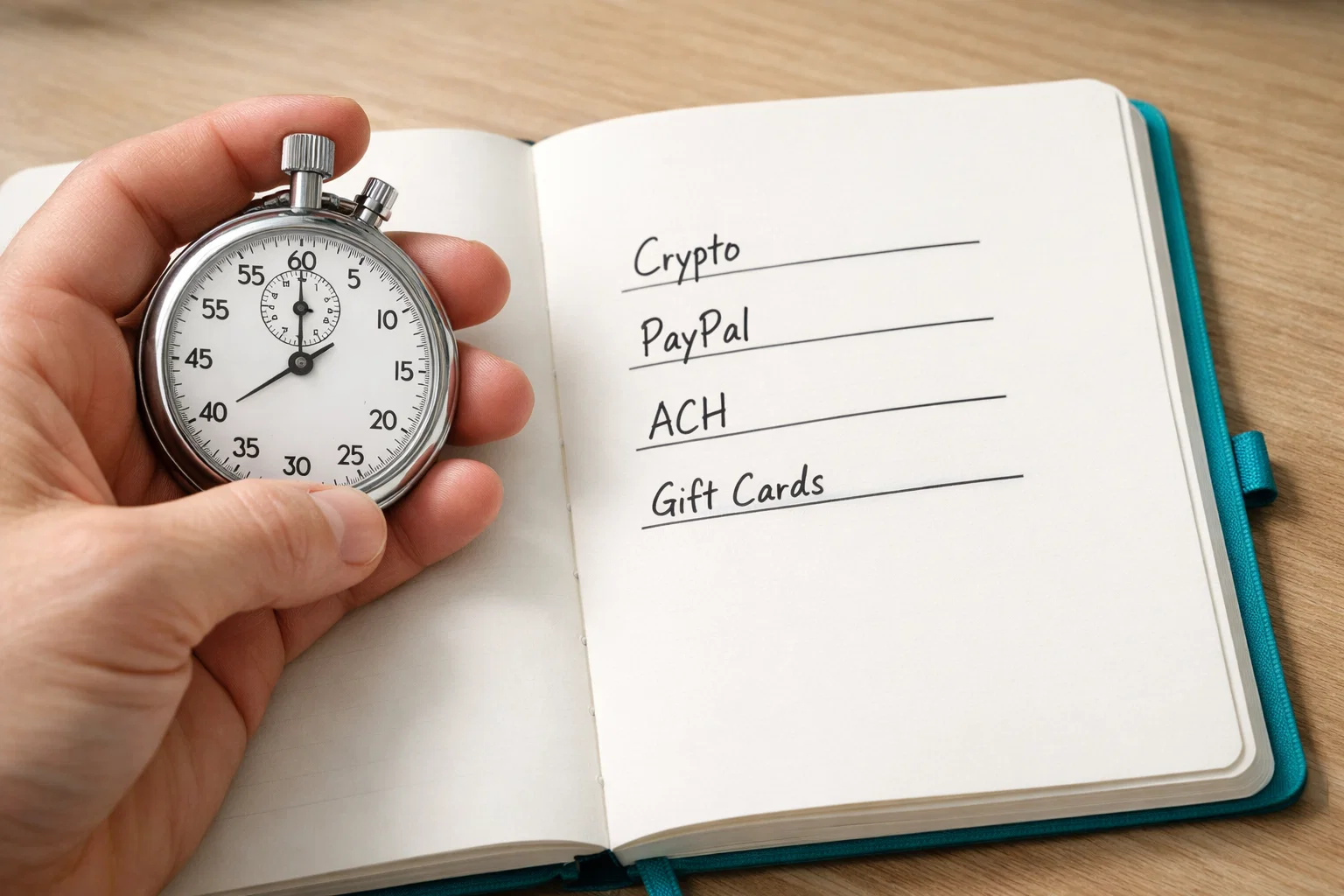
Ask me what the single most over-promised feature at new brands is, and my answer every time is "instant redemption." The phrase appears on almost every new site's marketing pages. What it means in practice has more layers than most players realize until they try to redeem.
First KYC review
24 to 72 hours for document review at a new brand
Crypto payout (post-KYC)
Minutes to hours once approved
PayPal payout
4 to 24 hours on average
ACH bank transfer
48 to 72 hours for verified accounts
Gift card delivery
6 to 24 hours for digital codes
The first redemption at any new brand is slower than subsequent ones because it is the one the operator uses to complete your KYC stack. A 24-to-72-hour first-KYC window is not a red flag; it is the industry norm. A 72-hour window that stretches into its fifth day without operator communication is a different story.
How the method changes the math
Once you clear first-KYC, the method determines everything. Crypto is the fastest rail and is increasingly the default at brands launched in 2025 and 2026. Stablecoin rails — USDC, USDT — are particularly common because they dodge the volatility that makes Bitcoin redemptions uncomfortable during settlement.
PayPal is the closest thing to a household-name rail the category has. When it works, it is fast. The catch is that PayPal has tightened its merchant category codes for sweepstakes brands, and some new operators cannot actually offer PayPal withdrawals even when the cashier page implies otherwise. The payment methods at new brands guide covers which rails are reliably available.
Gift cards have held steady as the backup rail — slower than PayPal or crypto, but broadly available. ACH bank transfers are the method for larger redemptions; when moving more than a few hundred dollars, the 48-to-72-hour ACH window is usually worth accepting rather than splitting into smaller crypto withdrawals.
A redemption at a new brand is not just a payment — it is a transaction the operator's fraud team reviews more carefully than at mature sites because new brands are primary targets for multi-account fraud. Expect slower queues during promotional periods and the week after state-level policy changes. For the method-by-method detail, see the redemption speed deep dive.
Player Profile at New Sweepstakes Casinos
The American Gaming Association's 2025 survey of 2,250 players changed a lot of internal industry assumptions about who actually uses these sites. Before the survey, the working stereotype in trade press was that sweepstakes casinos served a younger, crypto-native, heavily male audience. The data came back saying something else entirely.
Thirty-five percent of sweepstakes casino players are aged 31 to 40, 27 percent are 41 to 50, and 22 percent are 21 to 30. That older-skewing distribution is materially different from the younger-leaning demographics of offshore crypto sportsbooks or mobile slot apps.
The gender split is the other surprise. Players break down roughly 51 percent male and 49 percent female — compared to traditional sports betting's 72 percent male skew, you are looking at a fundamentally different audience. The AGA demographics deep dive goes through the methodology.
What players actually say about what they are doing
Ninety percent of US sweepstakes casino players consider playing on these platforms to be gambling. The industry's entire legal structure is predicated on the dual-currency model being "not gambling" for the purposes of state and federal statute. The players themselves, by a 9-to-1 margin, disagree. Sixty-eight percent say their primary goal is to win money; 69 percent describe the platforms as places to wager real money.
Minnesota AG Keith Ellison put the disconnect as bluntly as I have seen it put: Online platforms offering sportsbooks and casino games run by out-of-state and overseas operators may make it look as though online gambling is legal and safe in Minnesota, but let me be clear: it is not. Trying to rebrand poker chips as virtual currencies does not change the fact that these online gambling operations are unlawful.
Income and education composition
Forty-two percent of US sweepstakes casino players report a household income under 50,000 dollars, below the national average, and 38 percent have a high school diploma or lower. That matters when you are reading marketing copy that implies "premium" or "VIP" experiences — the typical player is not a discretionary-income gambler. Many are playing because the free-to-play and AMOE aspects offer a route in that licensed iGaming does not.
That income distribution is why responsible gaming tool gaps at new brands matter. The AGA's August 2024 policy statement put the concern directly: The lack of regulatory oversight presents many risks for consumers as well as the integrity and economic benefits of the legal gaming market through investment and tax contributions. These sweepstakes-based operators have weak (if any) responsible gaming protocols and few, if any, self-exclusion processes.
Where players meet the product
Mobile accounts for 71.85 percent of social casino market activity. App design comes before desktop polish. Progressive web apps compete with native iOS and Android builds depending on which platform's store policy the brand can navigate that quarter. The mobile app versus mobile web breakdown covers the platform constraints.
When you sign up at a new brand, you are joining a population that is older, more evenly split by gender, and much more aware that it is gambling than the industry's marketing admits. That context changes how you should read welcome offers, VIP programs, and the way responsible gaming tools are or are not surfaced.

The Regulatory Pressure Driving 2026 Launches
Victor Rocha, the Indian Gaming Association's conference chair, put the tribal-gaming perspective as sharply as anyone has: This industry wasn't built to last. It was all about the arbitrage. They knew this flimsy house of cards would eventually collapse. Now the game is about disgorgement. Think of all those beautiful dollars coming back to the people of California.
The regulatory push is not primarily coming from consumer-protection advocates in isolation. It is coming from the commercial and tribal gaming industries that view sweepstakes operators as competitors operating outside the tax and license structures the licensed industry pays for.
The tax revenue argument
Unregulated sweepstakes casinos accounted for approximately 50 percent of all online real-money casino advertisements viewed by US consumers in early 2025. Half of all US casino ad inventory is being purchased by operators not paying state gaming taxes on the resulting revenue. The ad share analysis covers how the 50 percent number was measured.
The Social Gaming Leadership Alliance's December 2025 impact report put a dollar figure on one state: Florida accounts for 8.5 percent of US sweepstakes operator revenue — more than a billion dollars in purchases — and a potential 6 percent tax would yield 63 million dollars in state revenue. Whether individual states ban sweepstakes, tax them, or ignore them depends on whether the legislature is persuaded by the tax-recovery argument or by the commercial-gaming-industry argument that sweepstakes should be prohibited outright.
The enforcement story across 2025 and into 2026 is not one big action — it is forty small ones. AGs and gaming commissions are using existing statutes to press sweepstakes operators out of specific jurisdictions, usually months or years before formal legislation catches up.
Louisiana AG Liz Murrill's July 2025 legal opinion was particularly consequential: It is the opinion of this office that online businesses offering casino-style games — purporting to be sweepstakes or social gaming platforms — are operating in violation of Louisiana law.
The Louisiana opinion gets cited in other states' proceedings because it is one of the most explicit AG-level rejections of the dual-currency legal theory on record. The Gulf states stance article covers how Louisiana, Mississippi, Florida, and Texas diverge.
The industry's counter-argument
Operator trade groups have mobilized an aggressive counter-response. The Social Gaming Leadership Alliance and the Social and Promotional Games Association both lobby heavily against state bans. SGLA executive director Jeff Duncan framed the New York situation as committing to collaborative engagement with state officials to develop balanced regulations. The SPGA has been more combative, arguing that state enforcement amounts to overreach against operators that already adhere to a strict code of conduct. The SGLA and SPGA breakdown covers these organizations in depth.
Why brands keep launching into this environment puzzles outside observers the most. The answer is math: the US market is projected at 11 billion dollars in gross gaming revenue in 2025, the category has grown at roughly 75 percent CAGR since 2019, and even if half the states impose bans, the remaining market is enormous. An operator capturing half a percent of a 5-billion-dollar post-ban market is building a meaningful business.
Waterhouse VC's October 2025 research note framed the uncertainty explicitly: The sustainability of sweepstakes industry growth may ultimately depend on how regulators choose to classify and control these operations.
That is the bet every new brand is making. Operators know they have a limited window, and some are designing their product depth accordingly.
Due Diligence Checklist Before Your First Deposit at a New Brand
If the evaluation framework is how I decide whether a brand goes into my coverage, this checklist is what I recommend to every person who asks "should I sign up at this new site?"
Before your first Gold Coin purchase at a newly launched brand
- Confirm the brand operates in your state by checking the signup page geoblock and the T&Cs "eligible states" list — both, separately.
- Read the full redemption section of the T&Cs, including minimum thresholds, maximum caps, playthrough ratios, and any expiration windows.
- Verify the license identifier resolves. Curaçao and Anjouan identifiers are searchable.
- Look at the game provider list. At least two recognizable names — Pragmatic Play, Hacksaw Gaming, Playson, BGaming, Nolimit City — should be present.
- Identify the parent company in the T&Cs or About page. If the parent is not named anywhere, that is a signal.
- Test customer service response before you need it. Send a pre-registration question and time the reply.
- Document welcome bonus terms the moment you register. Screenshot them.
- Verify responsible gaming tools exist and are accessible from your account dashboard.
The T&C read is the single highest-value step
T&C language to look for
- Specific numeric playthrough requirement (1x, 2x, or 3x)
- Specific minimum redemption threshold in SC
- Named list of excluded states
- Defined maximum redemption per day or per week
- Clear policy on balance handling during account closure
- Arbitration jurisdiction spelled out
T&C language to treat as a warning
- "Reasonable playthrough requirements as determined by the operator"
- "Redemption thresholds may vary"
- "Excluded jurisdictions as updated from time to time"
- Generic "bonus abuse" clauses without concrete definition
- No arbitration or dispute-resolution jurisdiction named
- Silence on what happens to SC balances if the brand exits your state
The watchlist approach
My own workflow when a new brand appears is to add it to a watchlist for fourteen days before committing any attention. During those fourteen days I monitor the soft-launch progression — does state coverage expand, does the game library grow, do welcome terms stabilize, do first redemption reports appear on community channels with consistent times. Brands that pass fourteen days of quiet observation go into deeper evaluation. Brands that have already changed their welcome offer three times get removed from the list.
This is the same pattern I would recommend for any reader who does not have time to build elaborate evaluation tooling. The fourteen-day watchlist costs you nothing and removes the worst category of new-brand risk: brands that launch aggressively, attract heavy signup volume in their first weeks, and then quietly alter their core terms once they have a player database to monetize.
Proprietary tool · Newestsweepscasinos
The Cold-Start Index & Exposure Ladder
A brand-new sweeps site has no track record to read. This tool scores the seven-point framework into a single 0–100 index, then converts that index into the only number that matters before you register: how many dollars you should expose to an operator that has never paid you once — and what it actually costs to reach the redeem button at all.
- Stage 1 exposure ceiling
- —
- Expected redeemable SC per package
- —
- Packages needed to reach the threshold
- —
- Cost of proving the brand pays once
- —
- Unverified money at risk per redemption test
- —
Exposure ladder
- Stage 1 — proof—
- Stage 2 — repeat—Unlocks only after one redemption clears and pays inside 72 hours, documented with a screenshot of the cashier timestamp.
- Stage 3 — routine—Unlocks after a second clean redemption and 90 days live with unchanged welcome terms. Never exceeds your monthly figure.
The index weights the seven framework points at 18/14/12/18/10/10/18, applies a launch-age multiplier and deducts for rewritten welcome terms and gray-zone enforcement. Redeemable SC is an expected value: wagering S coins at Nx playthrough returns S x (1 - (1 - RTP) x N) on average, and real sessions land far above or below that line. The package count assumes purchase bonuses only: daily login rewards and AMOE requests are deliberately excluded, because those are exactly the route this tool recommends when the proof cost outruns the ceiling. Estimates only, not legal or financial advice. 18+, and 21+ in several jurisdictions. If gambling has stopped being fun, call 1-800-GAMBLER.
The Most Asked Questions About New US Sweepstakes Casinos
These are the questions that come in most often. Each answer is framed around what the data and regulatory record actually show. For deeper treatment, I have linked through to the relevant cluster article.
What is a new sweepstakes casino and how recent does it have to be to qualify?
My working definition is eighteen months or less of publicly live operation in its current form — same dual-currency structure, same T&Cs framework, same game library vendor deals. The industry launched more than twenty-five new brands in 2025 alone, bringing the total active platform count past 140.
Are newly launched sweepstakes casinos safe to use in the US?
Safety at a new brand depends on operational specifics — parent company identity, license verification, game provider roster, T&C clarity, payment processor disclosure — none of which you can assess from marketing copy. The evaluation framework earlier in this guide covers the seven questions I run before considering a brand safely assessable. The AGA has been explicit that many operators have weak responsible gaming protocols.
Which US states allow new sweepstakes casinos in 2026?
Roughly 33 states permit the dual-currency model as of April 2026. Seven have confirmed bans: California (effective January 1, 2026), Connecticut, Montana, New Jersey, New York, Indiana (effective July 1, 2026), and Maine. Several more states are in gray-zone enforcement without statutory bans — Illinois, Louisiana, Michigan, Mississippi, and Minnesota all have active actions. The state-by-state legality map breaks down every current position.
How do no-deposit welcome bonuses at new sweepstakes casinos work?
A no-deposit welcome bonus delivers Gold Coins and a small Sweeps Coins amount in exchange for registration, email verification, and sometimes phone verification — without requiring a Gold Coin purchase. The SC portion typically has a playthrough requirement (commonly 1x, though Stake.us uses 3x) that must be cleared before redemption. Most no-deposit offers release the full advertised SC across two or three unlock stages.
Can I win real money at a newly launched sweeps casino?
Sweeps Coins redeem at a 1 SC = 1 USD ratio at most brands, subject to playthrough, minimum thresholds (usually 50 to 100 SC), and KYC verification. Brands offer redemption via crypto (stablecoins and BTC), PayPal, ACH, and Visa gift cards. First redemption takes 24 to 72 hours for document review, then minutes to three business days for settlement depending on the rail.
How fast can I redeem winnings at a new US sweepstakes casino?
After KYC is complete, crypto clears in minutes to hours, PayPal in 4 to 24 hours, gift cards in 6 to 24 hours, and ACH in 48 to 72 hours. The first redemption adds a 24-to-72-hour KYC review on top. "Instant redemption" almost always means instant after KYC — not on first request. The redemption speed guide covers the method-by-method timelines.
What red flags should I watch for when a sweepstakes casino has just launched?
The most common red flags are vague T&C language on playthrough and redemption, a missing or non-resolving license identifier, no named parent company, absent or unrecognizable game providers, and a welcome offer that changes materially in the first two weeks. Operators making more than one of those errors tend to make others you cannot see. The brand verification guide works through each signal in depth.
One additional data point worth keeping in mind: only 12 percent of sweepstakes casino users make a first-time purchase, compared with more than 50 percent conversion on licensed gambling apps. That math forces acquisition spend higher than at regulated operators. Adam Ryan at Casino.org summarized the broader picture: 2025 has been the year of sweepstakes casinos, no doubt.
What 2026 Means for Players Choosing a New Sweeps Casino
The honest summary of everything above is that the category is bigger, faster-moving, and more legally exposed than it has ever been — all at the same time.
If you are a player trying to make sense of whether a brand-new site is worth your attention in 2026, the single most important thing to internalize is that the old heuristics — "bigger welcome bonus is better," "more games means better operator," "app store presence means legitimacy" — no longer work as filters. The industry moves too fast, and too many operators have figured out how to game each of those surface signals. The only reliable filter is the evaluation framework: parent company, license footer, provider roster, T&C specificity, processor disclosure, community signal age, and first redemption behavior.
The regulatory environment is the other thing to keep in clear view. Seven confirmed bans, dozens of gray-zone enforcement actions, and a clear split between state AGs pushing cease-and-desist letters and industry trade groups pushing back. Operators launching in 2026 know they are launching into shrinking addressable geography, which is why they are launching fast and spending aggressively on acquisition. Understanding where the economics come from is the difference between being the target of a marketing funnel and being an informed participant.
The Waterhouse VC framing — that the category's sustainability depends on how regulators choose to classify and control these operations — is not going to resolve cleanly in 2026. California's unanimous ban and New York's AG action point one way. The tax-revenue arguments from Florida and other states considering regulation point another. The likely outcome is a patchwork that continues to shift state by state for at least another full legislative cycle. Any new brand you register with today is, implicitly, a bet on which states end up where.
I have been covering this industry through three major regulatory inflection points, and 2026 is the first one where I find myself telling readers to slow down rather than speed up. The sites are more numerous than ever and easier than ever to sign up for. The terms are less standardized than at any point in the category's history. The regulatory exposure on any single operator is higher than it has ever been. None of that means "do not engage." It means engage with more scrutiny than you would have needed even a year ago, and use the frameworks in this guide — or equivalent ones you build yourself — rather than relying on surface signals the operators have optimized against.