
Crypto Rails at New Sweepstakes Casinos: USDC, USDT, BTC, and Beyond
 Available in US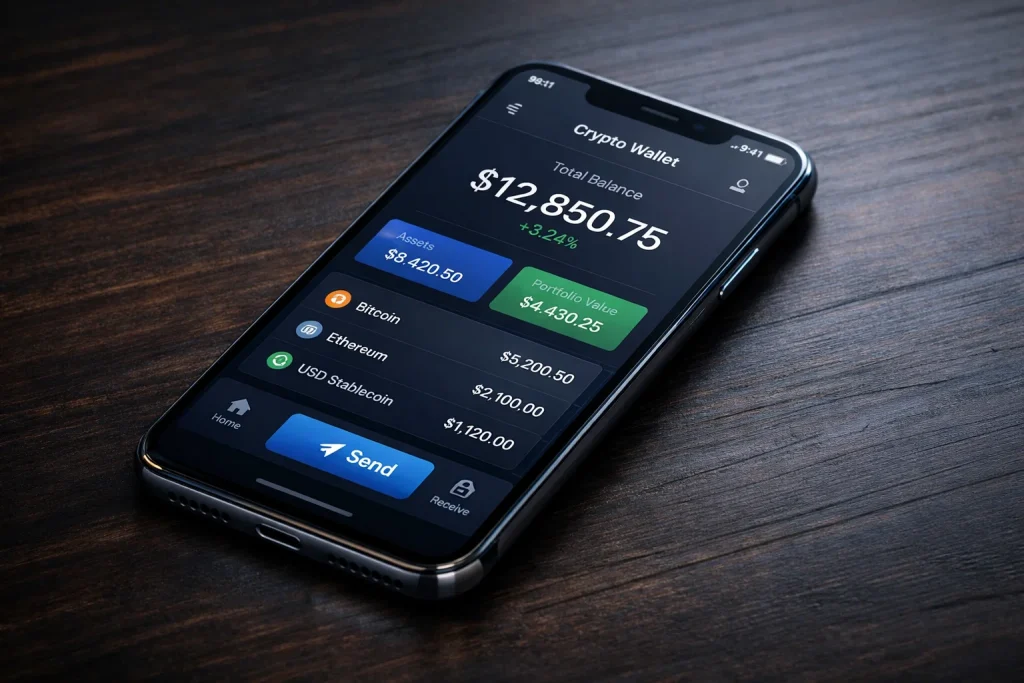
Crypto As The Default Fast Rail In 2026
Three years ago, crypto redemption at a sweepstakes casino felt experimental. The operators supporting it were early adopters, the workflows were clunky, and the payout speeds were not reliably faster than PayPal. By 2026, the picture has inverted completely. A meaningful share of new brand launches in the 2025-2026 window lead with crypto rails, and for players who can use them, crypto has become the fastest and lowest-friction redemption path available.
The shift is driven by operator economics as much as player preference. Crypto rails sidestep the payment-processor bottleneck that has shaped the category for a decade. Visa and Mastercard’s posture toward sweepstakes operators varies and has tightened in some jurisdictions. PayPal operates on its own risk model that can change without notice. ACH transfers settle slowly and require bank-level relationships that not every new operator has. Crypto settles on blockchain rails the operator does not depend on any third party to maintain.
For a player, the practical outcome is clean: ACH bank transfers from sweepstakes casinos complete within 48 to 72 hours for verified accounts, PayPal withdrawals average 4 to 24 hours, gift cards process in 6 to 24 hours – and crypto, at most crypto-capable operators, settles in minutes to a few hours once the redemption is approved. The speed difference is real. The tradeoffs – wallet management, network fees, tax complexity – are also real, and worth understanding before committing to crypto as your primary redemption rail.
Explore payment methods at new sweepstakes casinos.
Stablecoin Vs Volatile Coin Redemptions
The single most important decision in crypto redemption is whether you are receiving a stablecoin or a volatile coin. USDC and USDT – US dollar-pegged stablecoins – are the dominant crypto redemption options at sweepstakes operators that support crypto. Bitcoin (BTC), Ethereum (ETH), and occasional altcoins are the volatile alternatives.
Stablecoins track the US dollar value closely. If you redeem 100 SC to USDC, you receive approximately $100 worth of USDC – subject to minor variance around the peg and network fees. The dollar value is preserved between redemption and your wallet. If you hold the USDC for a day, a week, or a month, it is still worth roughly $100. If you sell or convert it to USD, the conversion is straightforward and the dollar amount is predictable.
Volatile coins do not track the dollar. If you redeem 100 SC to Bitcoin, you receive approximately $100 worth of BTC at the moment of redemption – but the value in BTC floats. Over the next hour, day, or week, the BTC value in dollars can change substantially in either direction. Redeeming to volatile coins is a simultaneous redemption and crypto-market trade, whether you intended it that way or not.
For most players, stablecoins are the correct choice. The redemption itself is a transaction that you want to complete cleanly, and the stablecoin version lets you park the value without exposure to crypto-market volatility. If you decide later to convert to BTC, ETH, or any other asset, you do that as a separate trade at a separate moment. A redemption to Bitcoin commits you to a trade you did not consciously make.
Volatile coin redemptions make sense only for players who specifically want exposure to that coin’s price and who understand the tax implications. If you redeem 100 SC for $100 of BTC today, and BTC appreciates 20% over the next month, you sell for $120 – but you have a tax reporting obligation on the $20 gain between receipt and sale, separate from the original redemption income. Most players underestimate this complexity until they experience it at filing time.
Network Fees And Why They Matter For Small Redemptions
Crypto transactions carry network fees – the cost paid to miners or validators to include the transaction on the blockchain. These fees vary by network and by network congestion. For a small redemption, network fees can meaningfully erode the redemption value.
A USDC redemption on Ethereum mainnet during periods of high network activity can cost $5 to $25 in gas fees. If you are redeeming $100, that is 5% to 25% of your payout going to the network before it reaches your wallet. A USDC redemption on a Layer 2 network like Polygon or Arbitrum, or on a lower-fee chain like Solana, can cost under $1. The chain matters more than the operator in determining effective net payout on small redemptions.
Most operators that support crypto redemption offer a chain selection at the redemption step. The default is sometimes Ethereum mainnet – the safest, best-known chain but also the most expensive. Selecting Polygon or Solana for the same USDC payout dramatically reduces fees. A player who does not check this selection and defaults to Ethereum mainnet for a small redemption is overpaying on fees by an order of magnitude compared to the alternative.
For larger redemptions – $500, $1,000, $5,000 – the network fee matters less as a percentage. A $25 gas fee on a $5,000 redemption is 0.5%, which is reasonable. A $25 gas fee on a $50 redemption is 50%, which is prohibitive. Match the chain to the redemption size, and consider waiting for lower-congestion periods if you are redeeming small amounts on mainnet-only options.
Fee structures at sweepstakes operators sometimes include an operator-side fee on top of the network fee. Read the redemption page carefully. A brand that charges a flat $10 redemption fee on crypto plus network fees is materially different from a brand that charges only network fees. This is operator-level friction that varies and is worth comparing before choosing a crypto-heavy strategy at a specific new brand.
Custody Vs Non-Custody Wallets
A secondary decision when redeeming to crypto is where the crypto goes. The two options are a custodial wallet – typically hosted at an exchange like Coinbase, Kraken, or Binance – or a non-custodial wallet that you control directly (MetaMask, Trust Wallet, a hardware wallet).
Custodial wallets are easier to use and easier to cash out from. If you receive USDC to your Coinbase account, you can sell it to USD and withdraw to your bank through Coinbase’s integration with a few clicks. The tradeoff is that the exchange controls the funds – you do not have access to the private keys, and in extreme scenarios (exchange insolvency, account freeze, regulatory action), you could lose access to funds that are nominally yours.
Non-custodial wallets give you full control but require you to manage private keys. Losing the key or the seed phrase means losing the funds permanently, with no customer service path to recover them. Non-custodial wallets are also one step further from cashing out to USD – you typically need to transfer to an exchange first to sell, which adds a second transaction, a second fee, and a second point of friction.
For most sweepstakes players, a custodial wallet at a well-known exchange is the practical choice. The convenience is worth the custody tradeoff for redemption amounts that are not life-changing. A player who is specifically crypto-native and comfortable with self-custody can reasonably use a non-custodial wallet; a player who is using crypto only because it pays out faster should default to custodial.
One specific note: some new sweepstakes operators require the receiving wallet to be verifiable to you as the player, to prevent using crypto redemption as a money-laundering pathway. A custodial wallet at a KYC-compliant exchange that matches your identity satisfies this check. A non-custodial wallet might trigger additional verification at the operator side.
What New Brands Require Before First Crypto Payout
Every crypto-capable new brand runs first-time KYC before releasing crypto redemption, and the KYC is typically identical to what would be required for any other payout method. The first-time KYC cycle runs 24 to 72 hours for document review, name matching, and fraud prevention screening – the category baseline applies to crypto users the same as to PayPal or ACH users.
Beyond standard KYC, crypto redemptions sometimes require additional proofs. A wallet address must be provided, and some operators require the address to be verified as yours through a small test transaction or a signed message. The signed message – a cryptographic proof that you control the private key associated with the receiving wallet – is standard in the crypto world but unfamiliar to many players. Operators that require it usually walk you through the process step by step; operators that do not require it accept a raw wallet address with no further verification.
Some operators impose a first-redemption lockdown – a waiting period between wallet verification and the ability to receive a crypto payout. Typically 24 hours, sometimes longer. This is an anti-fraud measure: it prevents an attacker who has compromised an account from immediately pulling funds to a wallet they control. For legitimate users, the lockdown is a one-time friction that applies only to the first crypto redemption; subsequent redemptions to the same verified wallet usually process without the delay.
One final constraint: crypto redemption is not available in every state where a brand operates. Some states have crypto-specific financial regulations that the operator does not want to comply with, so crypto payout is disabled for residents of those states even when it is enabled elsewhere on the platform. The available payment methods in your specific state are the ones shown in your account’s redemption menu; the broader menu on the brand’s marketing pages may not match. Check before assuming. For the full picture of how method choice shapes redemption speed at new brands, our redemption speed guide covers the comparative timelines.
Do I pay gas fees twice when redeeming via USDC?
You pay network fees once – at the moment the operator broadcasts the redemption transaction to the chain. If you are redeeming to a wallet on Ethereum mainnet, the gas fee is whatever the network is charging at that moment. If you subsequently move the USDC from a custodial wallet to a non-custodial wallet, or to another chain, that second move is a separate transaction with its own gas fee. Two transactions mean two fees, but that is about how you choose to handle the funds after receipt, not about the redemption itself.
Can I redeem to a centralized exchange wallet?
Yes, at virtually all crypto-capable sweepstakes operators. A centralized exchange wallet is a standard and accepted destination for crypto redemption. The operator treats it like any other wallet address – the redemption flows to the address, and what the address belongs to (a personal wallet, an exchange custody wallet, or a different service) does not affect the operator"s process. The one caveat is that some exchanges do not credit USDC or USDT deposits that arrive via certain chains; always verify that your receiving exchange supports the specific network and token you are redeeming before sending.
See also: newest sweepstakes casinos — the sweepstakes casino guide.