
How Mini-Games Inside New Sweepstakes Casinos Change Bankroll Math
 Available in US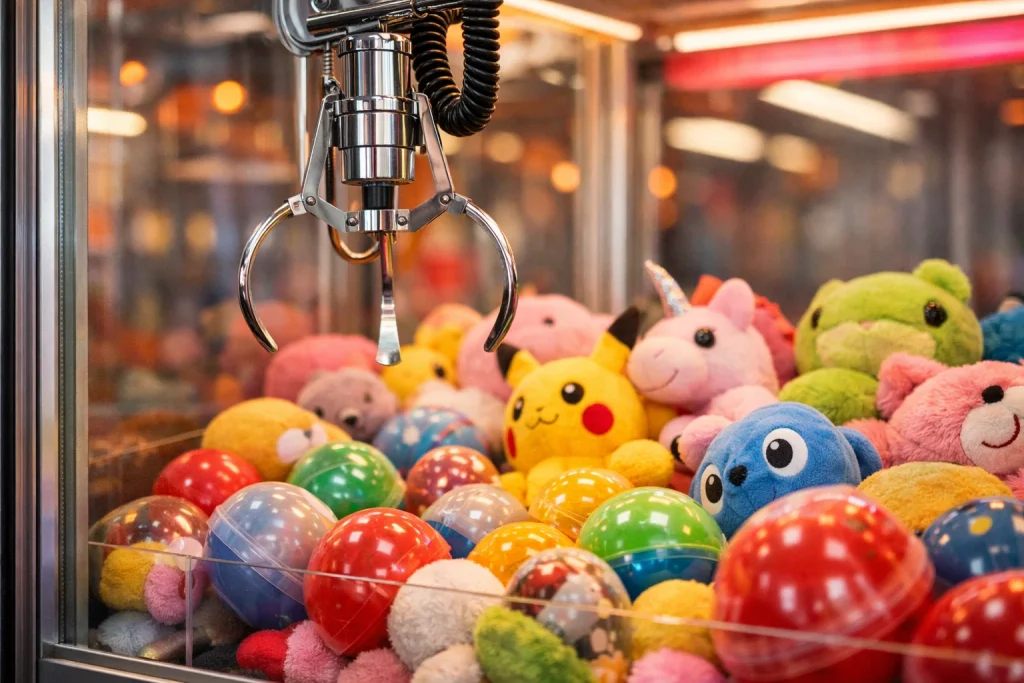
Why Mini-Games Became A 2026 Differentiator
The first time I watched a new sweeps brand lead its onboarding flow with a claw machine instead of a slot reel, I assumed it was a gimmick. Six months and a lot of session logs later, I had to rewrite that assumption. Mini-games have turned into the most distinctive product layer in the 2025–2026 launch wave, and they do something the slot catalog cannot: they let a brand own a mechanic nobody else has.
There is a reason for the timing. More than 25 new sweepstakes casinos launched in 2025 alone, pushing the total platform count past 140 — and when everyone has Pragmatic Play slots and a Hacksaw tile, the only way to look different is to build something in-house. Mini-games are that build. Claw machines, fortune wheels, elixir bars, gem meters — they are cheaper to iterate than a full slot and they double as a retention hook for the session a player would otherwise close after two spins.
But here is the part most operator marketing glosses over: mini-games reshape how your Sweeps Coins balance actually moves. They add non-linear token flow — you can win currency A that unlocks currency B, which multiplies currency C, which redeems to SC at a rate you did not know existed when you opened the app. That changes bankroll math in ways a straight slot session does not. Before you treat a mini-game as a free bonus feature, it is worth knowing what the mechanic is really doing to your expected value.
Explore slot RTP and volatility at new sweeps casinos.
The Claw Machine Mechanic Explained
Claw machines in sweeps apps look like their arcade ancestors and behave nothing like them. There is no physical claw, no gravity, no operator-adjustable grip strength. What there is, under the skin, is a weighted random draw tied to an animation that the claw either grabs or misses based on a result decided the moment you press the button.
The prize pool inside a typical claw unit is a layered list. Most items are low-value GC bundles — the digital equivalent of a plastic keychain. A smaller band holds SC amounts, usually between 0.10 and 2 SC. A thin top tier holds larger SC drops and occasionally unlocks to a bonus game. The payout distribution is an RNG curve like any slot, just dressed differently. Your odds of snagging the top prize on a 4-token claw attempt are not materially better than the odds of hitting a premium symbol on a 96% RTP reel — they are just expressed through a gripper instead of a spin button.
The wrinkle that matters: many claw machines require multiple attempts to reach the highest-value shelf, and those attempts are paid in mini-game tokens, not GC or SC directly. The tokens come from daily missions, login streaks, or social media share prompts. That is the mechanic’s real purpose. The claw is not a new way to play; it is a sink for retention currency that operators hand out as a reason to come back tomorrow. The industry has grown at roughly 60–70% CAGR from 2020 through 2024, and retention math is what separates the brands that keep players through month three from the ones that burn them out in week two.
If you want to reason about a claw’s expected value, you need two numbers the UI rarely surfaces cleanly: the token cost per attempt and the SC share of the prize table. Without both, you are evaluating an opaque feature on vibes.
Elixir, Gems, And Other Currency Layers
A quick taxonomy, because the names vary and the logic repeats. Elixir is a soft currency that usually fills a meter as you play slots or tables. When the meter tops out, it triggers a bonus — free spins, a wheel spin, a small SC drop. Gems work the same way but typically cash out into a shop where you buy entries into a separate prize draw. Some brands use Keys that unlock chests that contain randomized rewards. Others use Tickets for a periodic mega-drawing. Under all of these, the engine is the same: a side meter that banks your slot activity and pays it back as a secondary reward.
The math question is whether this third layer of currency adds value or disguises churn. In most implementations I have tracked through a full week of sessions, the elixir/gem layer is worth an extra 0.5% to 1.5% in effective RTP when you count the redeemable SC it eventually pays out. That is not nothing — on a $100 Gold Coin package with 20 free SC attached, an extra point of RTP across the session is another dollar or two back at redemption. But it is also not a game-changer, and it is vastly overrepresented in onboarding screens that tell you about gems before they tell you about playthrough.
What the side currency is genuinely doing: it is lengthening the session. A slot session without an elixir meter ends when your balance does. A slot session with one keeps going because you are 12% of the way to the next bonus, and nobody wants to leave with a half-full bar. Operators know this. The design intent is not to give you more RTP; it is to give you more reasons to keep the tab open. The extra RTP is real but incidental. Treat the gem meter as a feature that matters for retention and as a mildly positive modifier to expected return — not as a sweeps coins machine in its own right.
Bankroll Impact: When Mini-Games Actually Pay Out SC
Here is the bankroll question most players get wrong: how much of the time spent in mini-games actually converts to redeemable SC, versus how much of it burns GC that was never going to redeem anyway?
Split the answer by game type. Claw machines funded by free daily tokens are net-positive for SC because the cost of play is zero — any SC that drops is pure addition. Claw machines funded by GC purchases are closer to break-even, because the GC you spend has value only if you planned to play through it anyway. Fortune wheels attached to daily logins are almost always net-positive — you did not buy the entry, so a 0.25 SC spin is 0.25 SC you did not have. Elixir meters that fill only in SC mode pay out in SC; elixir meters that fill in GC mode pay out in GC, which ends when you switch modes.
The cleanest rule I use: if the mini-game entry is paid for with a currency you had to buy, treat the mini-game as part of the slot session’s overall RTP, not as a separate bonus. If the entry is paid for with a currency the operator gave you — tokens, keys, login points — treat the mini-game as free expected value, and play it before you switch to paid slots, since there is no scenario where losing the free entry costs you anything.
The industry-wide number that contextualizes all of this: US players spent an estimated $8.5–$10.6 billion on Gold Coin packages in 2024, and operators returned roughly 65–70% as Sweeps Coins prize payouts. Mini-games are part of that return, not in addition to it. They are not operating on a separate, more generous payout curve. If an onboarding screen implies otherwise, that is marketing, not math.
Fortune Wheels Vs Daily Spin Wheels
Two wheels live in most new sweeps apps, and they behave very differently.
A fortune wheel is usually a session-based bonus — you unlock a spin by triggering a slot feature, filling an elixir bar, or buying a specific GC package. The prize table skews toward GC multipliers and small SC drops, and the operator can tune it per session because it is part of the in-session economy. Expected value on a fortune wheel is typically decent but not outlier — it is a feature wrapped in a spinning animation.
A daily spin wheel is a retention mechanic and its economics are entirely separate. You get one spin per calendar day just for logging in. The prize table is slim — usually 0.1 to 0.5 SC on most days, with a rare top prize of 5 SC or more. Run the numbers across a month and the daily wheel alone pulls in roughly 4–9 SC for a dedicated player. That is close to what a modest welcome bonus delivers, spread across a month of 10-second logins. A lot of players ignore the daily wheel because individual spins feel small. The cumulative math says otherwise. The daily spin is the single most underused free-SC feature in the category, and at new brands in particular it is often more generous in the launch window while the operator is trying to hook retention.
For structural bonus mechanics that compound alongside the daily wheel, the full breakdown lives in our daily login bonus guide for new brands.
One note on scam-proofing: if a daily wheel never lands on anything better than the minimum prize, across multiple weeks, that is data worth reading. Legitimate wheels hit higher tiers occasionally; rigged ones do not. Keep a private log of what the wheel pays you for the first fourteen days. If the distribution looks like a flat minimum, your wheel is a retention illusion, not a bonus.
Do mini-game rewards count toward playthrough?
In most cases, no. SC won directly from claw machines, wheels, or gem cash-outs is usually credited as redeemable SC with the standard playthrough attached — typically 1x at most new brands, 3x at a handful. What often does not count: GC bonus credit from a mini-game, since GC has no playthrough in the first place. Check the specific brand"s terms, because a small number of operators apply a second playthrough layer to bonus-credited SC that sits on top of the base requirement.
Are the odds on a claw machine the same as on a slot reel?
The underlying math is the same — both are weighted random draws with a fixed expected return. What differs is the presentation and the cost structure. A slot reel is priced in GC or SC per spin with a stated RTP range; a claw machine is priced in mini-game tokens per attempt with no stated RTP and a prize table the operator does not always publish. That opacity is not a red flag by itself, but it does mean you cannot apply slot-style RTP reasoning to a claw without more data than the UI gives you.
See also: newest sweepstakes casinos — the new sweepstakes casino hub.