
Advertising Share: Why Half of US Casino Ads Come From Sweepstakes Brands
 Available in US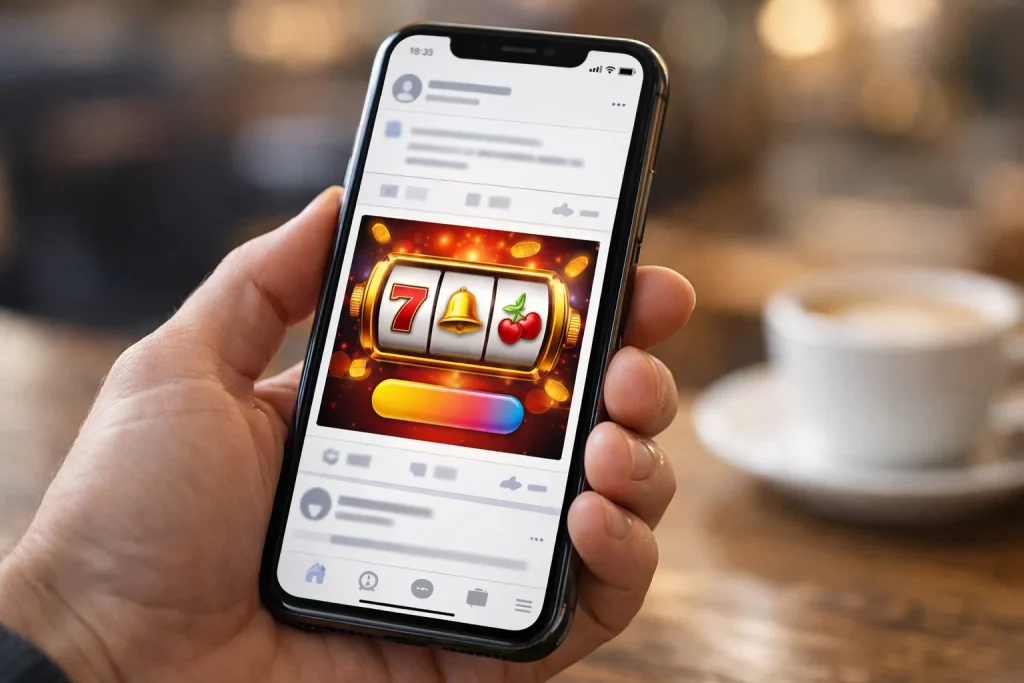
The 50% Ad-Inventory Flip
Something strange happened in the US online casino advertising market between 2022 and 2025: the unregulated side got louder than the regulated side. Unregulated sweepstakes casinos accounted for approximately 50% of all online real-money casino advertisements viewed by US consumers in early 2025. That is a remarkable figure for a category that is not formally licensed as gambling in most states where it operates. Half of the ads a consumer sees for products that look like online casinos are coming from brands that are not technically online casinos in the regulatory sense.
The flip is partly a supply story and partly a demand story. On the supply side, sweepstakes operators have grown aggressively – industry revenue projections put the category at around $11 billion in gross gaming revenue for 2025, and VGW alone spent $275 million on marketing in FY 2023-24. That advertising spend buys inventory. On the demand side, the licensed iGaming market exists in only seven states, which limits where regulated operators can advertise. A licensed New Jersey operator cannot run ads in Texas, but a sweepstakes operator can – and the total addressable marketing surface favors the sweepstakes side by a wide margin.
For a player, the advertising reality has a direct implication: much of what you see about the category is marketing, and much of what you see about “online casinos” more broadly is actually sweepstakes marketing wearing similar visual language. Understanding which ad is from which product type is useful because the legal and financial realities of the two categories are genuinely different, and the ads often do not clarify the distinction.
Read the AGA demographics of sweepstakes players.
Where Sweeps Ads Run
The dominant channels for sweepstakes casino advertising in 2026 are three: paid social (especially Meta and TikTok), programmatic display networks, and affiliate publishing. Each channel has distinct economics and distinct creative conventions.
Paid social is the most visible channel for consumers. A typical sweepstakes ad on Facebook or Instagram is a short video or carousel image showing someone winning, a headline offer for new players, and a direct call-to-action button. The platforms require disclosure that the product is a sweepstakes casino rather than a real-money gambling site, but the disclosure is usually in fine print or in the ad description rather than in the creative itself. Meta’s policies have tightened on gambling-related content over the past few years, which has pushed sweepstakes advertisers to emphasize the “social gaming” framing in their creative more than they did previously.
TikTok advertising for sweepstakes has grown rapidly in the 2024-2025 window, particularly through creator partnerships rather than direct-to-consumer video ads. A creator will run what appears to be organic content about their sweepstakes experience – a session, a big win, a redemption walk-through – with a paid partnership disclosure. The content is more persuasive than traditional display advertising because it is formatted as recommendation rather than promotion, and the attribution is tracked through creator-specific referral codes.
Programmatic display is the invisible backbone of the category’s advertising. The banner ads you see on news sites, weather apps, and long-tail content sites are often programmatically purchased and delivered to audiences that algorithms have flagged as likely converters. These ads are cheaper per impression than paid social but convert less well, so they function mostly as brand awareness and retargeting rather than primary acquisition.
Affiliate publishing is the most efficient channel on a cost-per-acquisition basis. Review sites, comparison tables, and bonus-code aggregators drive a substantial share of signups in the category. Some of the 140-plus platforms in the sweepstakes space owe more than half of their signups to affiliate-sourced traffic. The commercial structure – affiliates get paid on conversions, not on impressions – makes affiliate content unusually effective at steering users through the decision funnel.
Ad Creative Trends At Brand-New Operators
The creative at newly launched sweepstakes brands in 2026 follows specific patterns that have emerged as the category has matured. Three trends dominate.
Celebration-moment imagery. New brand ads tend to lead with footage or stills of someone reacting to a win – hands in the air, genuine surprise expression, the specific visual vocabulary of excitement. The performance of this creative has been well-established through A/B testing, and nearly every new brand uses some version of it. The specifics vary: younger brands use younger models, brands targeting women use more balanced demographics, brands leaning into a premium positioning use higher-production footage. But the celebration moment is the near-universal anchor.
Bonus-size headlines. Brand-new operator ads typically lead with the specific new-player promotion amount prominently displayed: “500,000 GC + 60 SC FREE” as the dominant visual text. The emphasis is on the headline numbers rather than on product features or brand personality. This is acquisition-funnel creative – the goal is to get the click, and the click responds to the numbers. The 2025-2026 launch cohort has escalated these headline numbers substantially from the 2022-2023 norm because of the acquisition pressure in the current competitive environment.
Urgency language. “Limited time,” “new players only,” “exclusive offer” – these phrases appear with unusual density in sweepstakes casino ads relative to other consumer product categories. The urgency framing is designed to compress the decision window from “maybe I will check this out later” to “I should act now.” Whether the time limit is real in practice varies; many “limited time” bonuses run indefinitely as standard welcome offers with occasional refreshes of the copy.
What is noticeably absent from new brand ad creative: substantive product differentiation. Most ads do not explain what makes the brand different from the dozen other brands advertising in the same channel. The rational explanation is that at the top of the funnel, the click is the goal, and differentiation matters later in the funnel. The observational reality is that consumers cannot meaningfully compare brands from ad creative alone – the comparison has to happen on a review site, in an affiliate article, or through personal research after the click.
Athlete And Influencer Partnerships
The category’s most visible expansion into mainstream attention has come through athlete and influencer partnerships. These deals take several forms – equity stakes, paid endorsements, revenue-share arrangements, ambassador relationships – and they have reshaped the public perception of sweepstakes casinos over the 2024-2025 period.
The underlying logic is that mainstream name recognition transfers trust. A consumer who would be skeptical of a brand-new sweepstakes operator they have never heard of is more willing to engage when a familiar athlete or creator is associated with the brand. The athlete brings audience trust that the operator has not earned on its own. Whether the athlete actually uses the product is a secondary question; the association itself is the value being transferred.
The risks to the athlete side are real. Endorsing a brand that later fails to pay redemptions, exits markets unexpectedly, or faces state-level enforcement action creates reputational damage that can outlast the endorsement revenue. Several high-profile endorsement deals in the 2024-2025 window became complicated after state regulatory actions affected the underlying brand. The athletes and creators involved generally managed the reputational consequences, but the pattern is visible and probably slowing the rate of new endorsement deals in the 2026 launch cohort.
For consumers, the practical implication: athlete endorsement is a useful signal but not a decisive one. An athlete’s presence in a brand’s marketing suggests the operator has the capital to sign the deal, which filters out the smallest and most under-capitalized operators. But the endorsement does not guarantee operational quality, honest terms, or regulatory compliance, and the legal sophistication of the endorsement agreement rarely includes the kind of operator-quality warranties that would make the endorsement a durable trust signal.
Audience fit matters too. An athlete whose following maps closely to sports betting demographics (72% male, sports-focused) may not translate to the more balanced sweepstakes audience (51/49 male-female split per the AGA survey). Brand-athlete fit is usually addressed in the deal structure, but some partnerships have been poorly matched and produced less acquisition lift than the investment justified.
Regulatory Pushback On Ad Targeting
The regulatory picture for sweepstakes advertising has tightened materially in 2025 and continued tightening into 2026. Multiple states have raised concerns about the volume and targeting of sweepstakes marketing; advertising platforms have adjusted policies in response; and the combined effect has reshaped where and how new brands can advertise.
State-level pushback has come through consumer protection and gambling regulators. When a state sends cease-and-desist letters to sweepstakes operators, advertising platforms receive copies or become aware of the regulatory action through other channels. This triggers policy reviews at the platform level, and platforms sometimes disable advertising from named operators for specific geographies even before the operator itself exits the state. New York’s June 2025 AG action removed 26 operators from the New York market – advertising from those operators disappeared from New York-targeted inventory within days of the letters, even for brands that had not yet formally announced their New York exit.
Platform-level adjustments have been broader. Meta, Google, and TikTok have all refined their policies around gambling and sweepstakes advertising in ways that affect what creative is allowed, what geographic targeting is permitted, and what age verification the platform requires. The details change frequently; the direction is consistently toward more restriction.
The specific pressure point on ad targeting: the use of lookalike audiences and retargeting for users who have shown interest in gambling or adjacent content. Platforms have tightened these capabilities for sweepstakes advertisers, which increases the effective cost of acquisition and reshapes how new brands plan campaigns. Brands that depended heavily on algorithmic audience targeting are now running campaigns with broader audience definitions, less precision, and higher cost-per-signup.
For the broader picture of how operator economics translate into the new-brand launches consumers see, our customer acquisition analysis for new sweepstakes casinos covers the unit economics underneath the advertising spend.
Are sweeps brands allowed to run TV ads?
Yes, in most states where they operate, subject to the applicable broadcast standards. TV advertising in the category has grown since 2022, though it remains a smaller channel than paid digital. The creative standards are stricter – TV requires broadcast review, and the sweepstakes category"s legal framing means operators have to be careful about language that would classify the product as gambling for broadcast compliance purposes. A handful of major brands run consistent TV campaigns, primarily during sports broadcasts; most new brands stick to digital channels where the creative can iterate faster and the spend scales more flexibly.
Do influencer-driven new brands get more scrutiny?
From regulators, not necessarily – regulators look at the operator"s legal structure and operational behavior, not at whether the marketing involves influencers. From consumers, yes – a brand that leads with an influencer partnership often draws more review-site attention, more social media commentary, and more community scrutiny than a brand operating at similar scale with lower-profile marketing. That increased visibility cuts both ways: genuinely good brands benefit from the attention, while brands with operational problems get them exposed faster because the influencer affiliation draws more observers.
See also: newest sweepstakes casinos — your source for sweepstakes casino info.