
Customer Acquisition: Why New Sweeps Brands Beat Licensed Casinos on Sign-Ups
 Available in US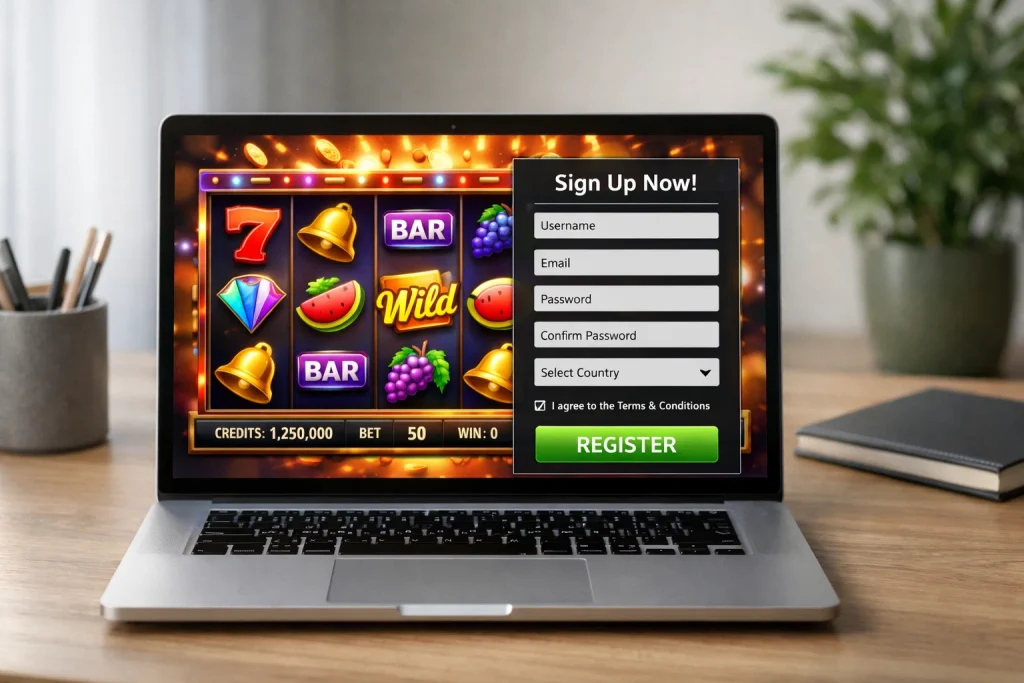
The 3x Gap Optimove Uncovered
A marketing executive at a mid-tier regulated iGaming operator pulled me aside at an industry event late last year and asked what I thought the real story was behind the acquisition numbers. He had been watching a new sweepstakes brand outrun his team’s signup rate by a factor of three, on roughly half the creative spend, in a market where his operator was the licensed incumbent. His question was not academic. It was a budgeting question about 2026.
The story he was chasing is captured in a single Optimove data point: sweepstakes casinos acquired new customers at three times the rate of licensed online casinos between July 2024 and December 2024. That is not a marginal difference. Active-player growth at sweepstakes operators averaged approximately 16% over the same period – more than triple the pace recorded in regulated iGaming. For every new user a licensed operator converted, a well-run sweepstakes brand converted three.
The obvious interpretation is that sweeps is “winning” and regulated iGaming is “losing,” and that framing has driven a lot of trade-press coverage. The more useful read, and the one that explains why more than 25 new sweepstakes casinos launched in 2025 alone, is that the two models are acquiring from different funnel mechanics with different structural constraints. The 3x gap is not a product quality judgment. It is the predictable output of two funnel designs sitting in very different regulatory environments.
Explore advertising share in sweepstakes casinos.
What The Optimove Data Actually Measured
The Optimove comparison tracked new-customer acquisition rates across licensed iGaming operators and sweepstakes operators in the US market, using standardized definitions of a “new customer” – first registration, first-session activity, and first purchase or first bonus claim. The figure the industry pulled out was the 3x ratio, but the underlying measurement captured specific behavior patterns that are worth understanding because they shape how the ratio should be interpreted.
A “new customer” at a regulated iGaming operator has to clear a comprehensive verification process before they can deposit or play – name, address, date of birth, Social Security number (in most states), and sometimes live facial verification. This takes time and introduces drop-off at every step. A new customer at a sweepstakes operator typically completes a shorter onboarding – email, date of birth confirmation, state, and a password – and can play in GC mode immediately. KYC is deferred to the first redemption. The friction difference between the two signups is enormous.
That difference alone explains a meaningful part of the 3x gap. If you measure the funnel from ad click to first session, sweeps wins by a huge margin because the sweeps funnel is structurally shorter. It does not mean the sweeps product is three times as compelling. It means the sweeps onboarding has three times fewer friction points blocking the measurement point that “acquisition” uses.
What the data does not tell you, and what matters: conversion to paid activity and long-term retention. Those are where the real product economics live, and the answer there is less flattering to the sweeps side than the 3x headline suggests.
The 12% Conversion Ceiling And Why It Exists
Here is the counterweight number that the 3x figure needs. Only 12% of sweepstakes casino users make a first-time purchase, compared with more than 50% conversion rate on licensed gambling apps. The industry data that Optimove and others have published is consistent on this direction: sweeps brands acquire users much faster than iGaming brands, but convert those users to paying activity much more slowly.
The 12% ceiling is structural, not accidental. When onboarding is frictionless and the product has a no-cost pathway, a substantial portion of signups are what operators call “window shoppers” – users who want to try the product without committing financially. They will play GC mode on free daily login bonuses, maybe redeem a few modest SC amounts over time, and never purchase a Gold Coin package. This user is not a failed conversion in the same sense that a licensed-casino signup who fails to deposit is a failed conversion. The sweeps product is genuinely usable without payment, so a non-purchasing user is still a live user.
But from a revenue standpoint, that user is not producing much. Operator economics depend on the 12% who purchase, and that 12% has to subsidize the infrastructure for the remaining 88%. The regulated-iGaming model – where 50%-plus of signups deposit – has a tighter funnel but much better unit economics per signup. Sweeps operators run wider funnels with thinner per-user economics. Neither model is strictly better; they are optimized for different constraints.
Macquarie analyst Aaron Lee has framed the competitive dynamic in a way that matters for operators on both sides: “Though there are clear similarities between sweepstakes and iGaming, we see little evidence of cannibalization. Rather, we think the growth of sweepstakes could actually be a positive for iGaming legislation by attracting attention to the untapped tax revenues.” That is the analyst reading of a competitive picture that looks zero-sum from a single operator’s perspective but is additive at the industry level – the two models are expanding the total addressable market of US online casino activity rather than fighting over the same players.
What the 12% figure means for a new sweeps brand’s launch plan: acquisition is cheap, conversion is expensive, retention is critical. The brand that wins is the one that captures the 12% reliably enough to fund operations while continuing to grow the top of the funnel. The brand that fails is the one that overspends on acquisition without adequate conversion infrastructure.
Where New Brands Spend Their Acquisition Dollars
The acquisition budget at a typical new sweepstakes brand in 2026 splits across three channels in rough proportion. Affiliate marketing – commission-based deals with content sites and review publishers – is usually the largest share, often 40% to 60% of total spend. Paid social, primarily Meta properties and increasingly TikTok, is the second largest channel, typically 20% to 35% of spend. Programmatic display and influencer partnerships fill the remainder.
What the category is spending in aggregate: VGW’s marketing spend alone increased from $237 million to $275 million in FY 2023-24, and that is one operator among 140-plus. The category-wide marketing footprint is substantial. Unregulated sweepstakes casinos accounted for approximately 50% of all online real-money casino advertisements viewed by US consumers in early 2025. That half of inventory is funded by operators competing for the acquisition signal that Optimove documented.
Affiliate is the dominant channel because it is performance-based and because the acquisition measurement maps cleanly to affiliate tracking. An affiliate sends a user who registers; the affiliate gets paid on the signup or on the first purchase; the operator pays only on measured outcomes. This structure is why affiliate publishers proliferated around the category. The review sites, comparison tables, and bonus-code aggregators are downstream of an incentive structure that pays out reliably when users convert.
Paid social is growth-oriented but less efficient on a per-signup basis. The creative performance on social varies substantially across brands, and the cost-per-acquisition on social is usually higher than on affiliate. Brands use paid social for scale and for brand awareness; they rely on affiliate for efficient conversion.
Influencer partnerships are the wild card. Athlete endorsements, YouTube streaming deals, and Twitch partnerships can produce outsized acquisition bursts that affiliate and paid social cannot match. They also carry reputation risk – a failed partnership can hurt the brand as much as a successful one helps – and they are harder to measure. The brands that have invested heavily in influencer channels in 2025-2026 are betting on audience stickiness in a way that the affiliate and social channels do not provide.
What This Means For Bonus Quality In 2026
The acquisition-rate gap and the conversion-rate ceiling combined have a specific implication for players: bonus quality at new sweepstakes brands in 2026 is unusually generous by the category’s long-term norm, and the generosity is strategic.
When a new brand knows that only 12% of its signups will purchase, it has to make that 12% worth converting aggressively. The welcome bonus – the no-deposit SC bundle attached to registration – is tuned to close the gap between a window-shopper user and a first-purchase user. A larger, more generous welcome bonus increases the probability that a window shopper has a positive enough first experience to cross into the purchasing 12%.
That pressure has pushed welcome bonuses at 2025-2026 launches noticeably higher than the 2022-2023 norm. Where a new brand two years ago might have offered 2 SC plus a modest GC bundle on registration, a new brand in 2026 is often offering 5 to 15 SC plus larger GC packages, sometimes with additional redemption-minimum concessions for new accounts. The generosity is not driven by operator kindness. It is driven by the math of a wide funnel that needs a strong conversion hook.
For a player, the practical takeaway is that the launch window is the best time to sign up at a new brand. The welcome bonus at month one is usually better than the welcome bonus at month twelve, because the operator will quietly scale back generosity once the launch-phase acquisition pressure has cooled. For the structural breakdown of how these welcome offers are built and what to watch for in the fine print, our no-deposit bonus breakdown for new brands has the mechanics.
Does fast acquisition mean lower retention at new brands?
Not necessarily – but the correlation runs weaker than the acquisition headline suggests. A brand that acquires aggressively with generous welcome bonuses captures a mix of serious players and bonus-hunters, and the mix determines retention. Brands with strong product fundamentals retain the serious segment after the welcome bonus is gone; brands that depend on bonus generosity to sustain activity see retention collapse when the acquisition pressure drops. The 16% active-player growth figure Optimove measured includes both serious retained users and churned bonus-hunters, and the ratio varies substantially by operator.
Are acquisition rates seasonal?
Yes, with a clear pattern. Q1 is typically the strongest acquisition quarter – new-year engagement, tax-refund spending windows, and the NFL playoffs-to-Super-Bowl marketing cycle all drive signups. Q2 softens. Q3 picks up ahead of the college and NFL seasons. Q4 is mixed – holidays compete for attention and marketing dollars get expensive. New brands that launch in Q1 tend to capture more aggressive acquisition numbers than brands launching in Q2 or Q3. The seasonality does not invalidate the Optimove 3x comparison, because the underlying iGaming baseline is seasonal in the same direction.
See also: newest sweepstakes casinos — your complete guide to new sweepstakes casinos.